
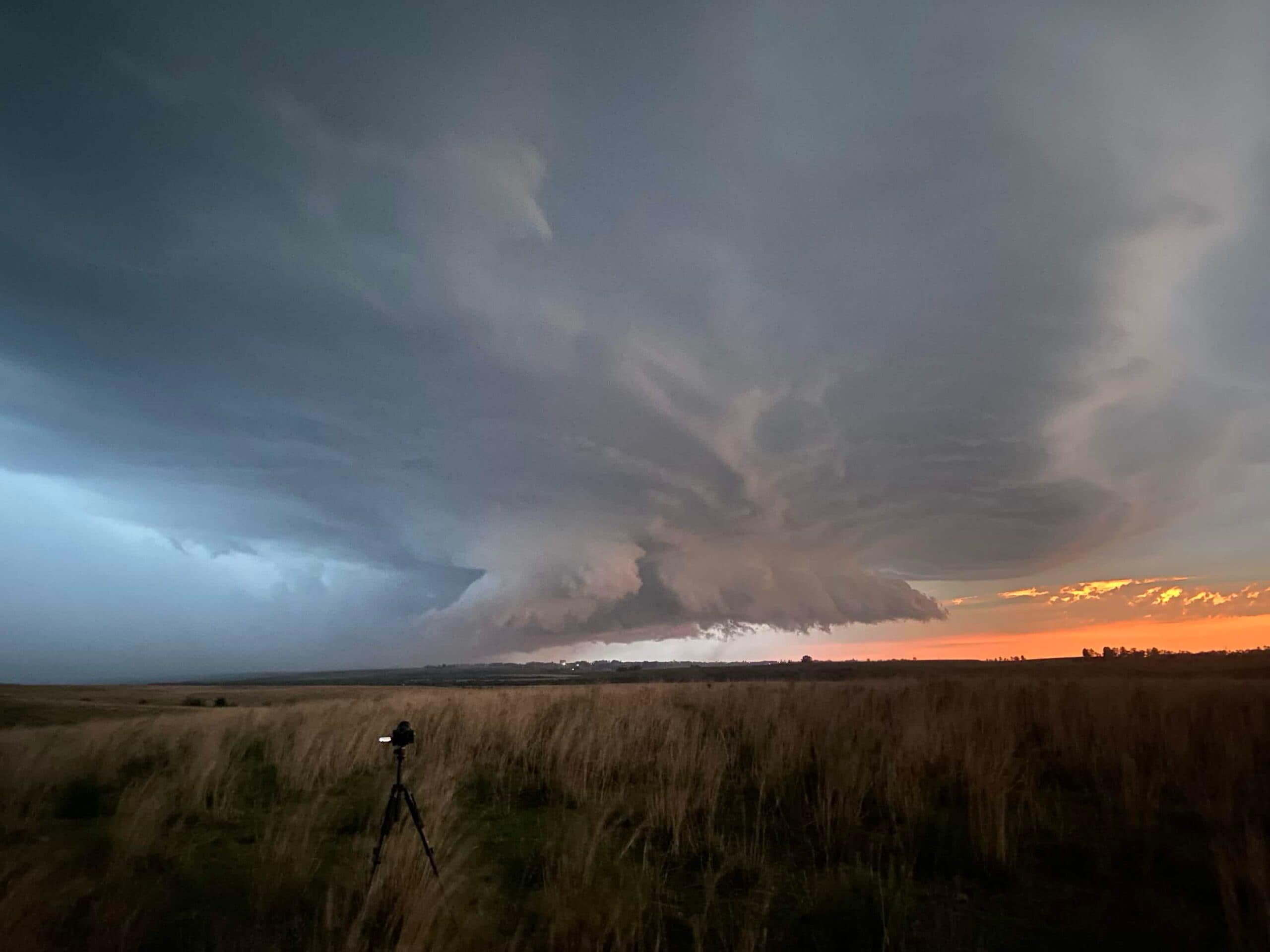

Everyone who chases storms chases because they love mother nature or because they have experienced the most powerful natural force our world has to offer, and wanted to see it again, and again, and again.
Personally, I chase because, to be frank, I just love to chase.
I love the storms, the experiences that come with traveling, and the stories that I come home with.
Recently, I embarked on a journey not only to document storms that spin backwards in the Southern Hemisphere, but also to spread weather awareness and bolster a movement in the tornado prone region of southern Brazil.
This story brings storm chasing back to what it really is about; passion aside, it’s about providing life saving information and bring public awareness.
THE BEGINNING:
During the planning stages of this trip, it was very evident that the people of southern Brazil had a passion for weather.
Back in 2024, a transitioning El Niño aided in producing heavy amounts of rainfall in parts of Rio Grande Do Sul, Brazil. This lead to generational catastrophic flooding and severe weather in central portions of the state.
You would have to imagine that in a year like 2026, which features a historic “Super El Nino”, the media in that region would run with dramatized headlines. And, unsurprisingly, the general public has latched on to this weather hype train of misinformation.
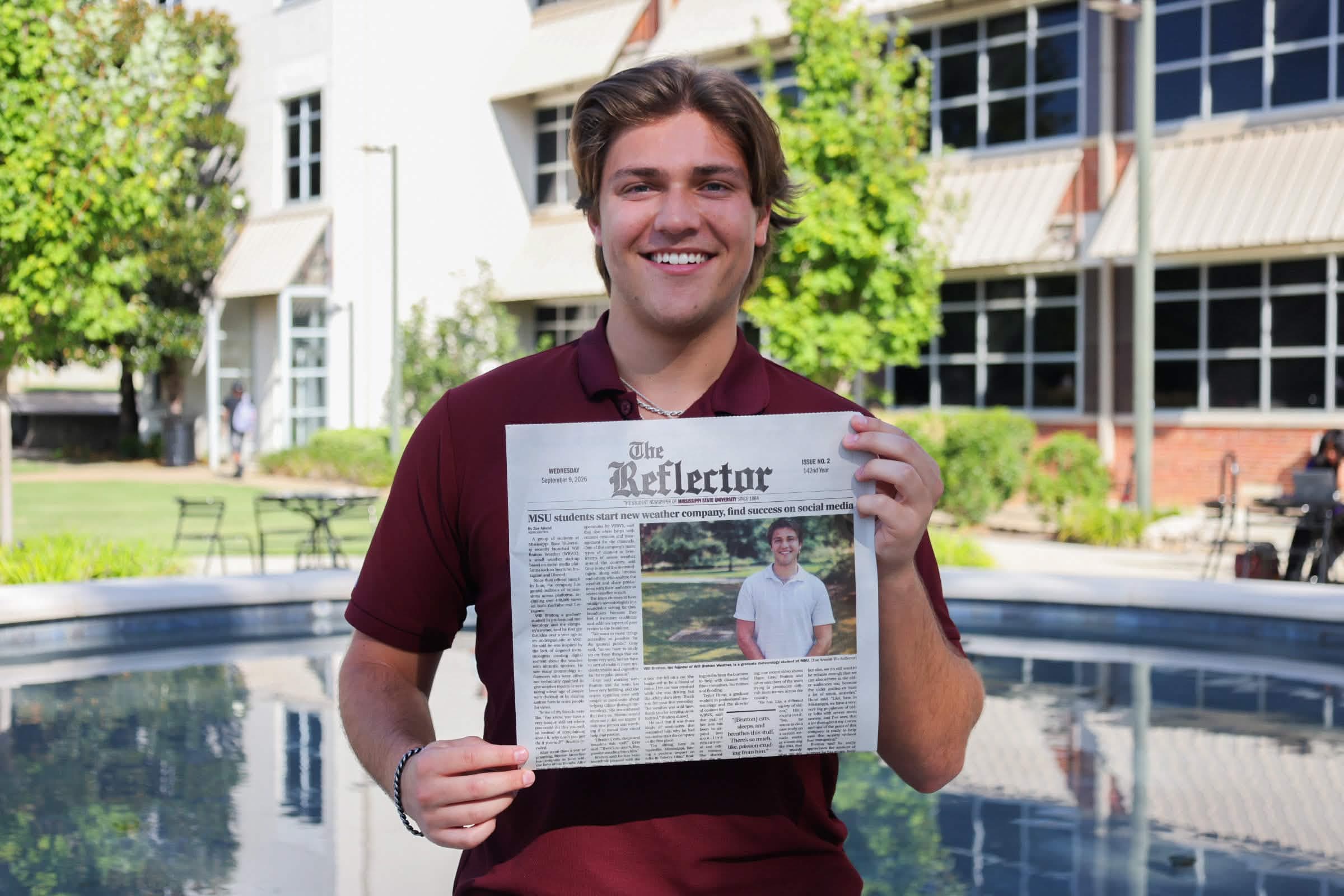
Nevertheless, the people are curios now more than ever about severe weather. In talking with my chasing partners and Will Bratton, we knew this would be huge for the surge in meteorology in South America, but we never could have seen how large it would get.
COMMUNITY FIRST:
In less than two weeks my friends and I would rack up over 50 million impressions on Instagram, nearly ten million on X, and hundreds of thousands on YouTube. And this was just our social media accounts!
The massive number of media companies that also shared our journey and took our content likely added hundreds of millions of more impressions.
Within a week we spoke to over 2,000 students about the importance of weather awareness and storm chasing; and we also met so many amazing people!
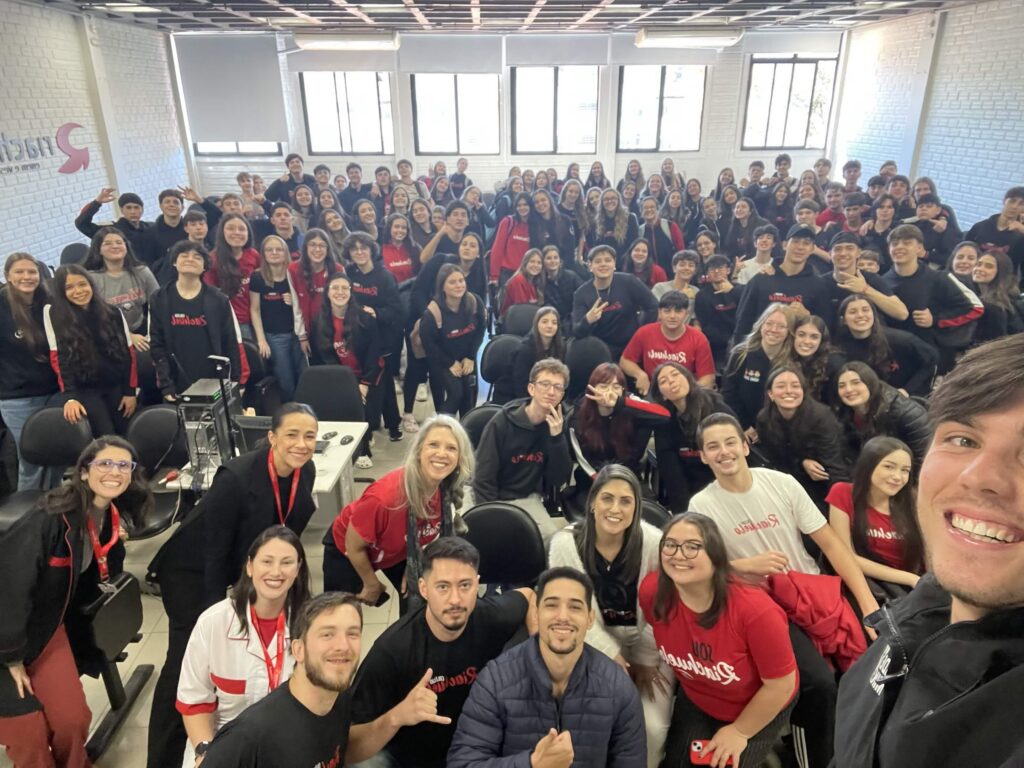
What begun as a trip to document supercell thunderstorms that twisted the opposite direction, turned into the beginning of a weather awareness revolution and the birth of a generation of Brazilian storm chasers.
In the grand scheme of things, we only chased four of the ten days we were there. Which, under normal circumstances, would lead one to think the chase was a failure.
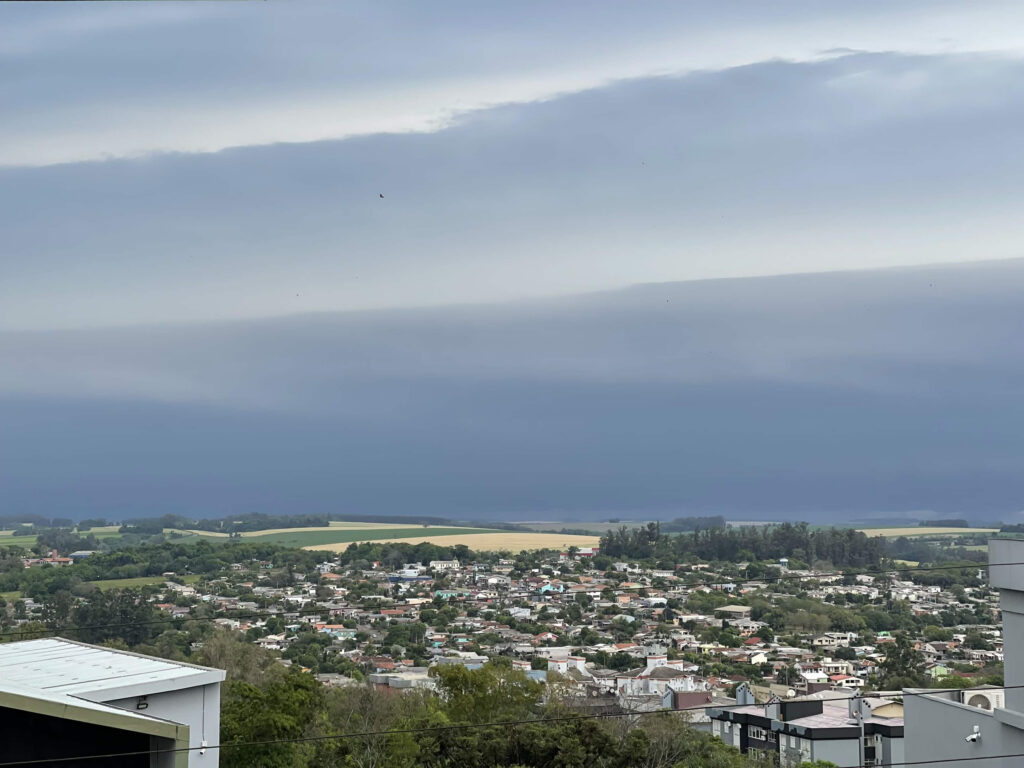
On the second day of the trip, we saw an amazing left-split supercell and possible tornado (or two). The fourth day we saw about five or six nighttime supercells (which left a trail of damage in central RS). On the last day, we documented a strong QLCS which spawned several imbedded tornadoes.
However, I think the somewhat lack of good chase days actually increased our ability to engage with the people of southern Brazil.
You see, when people are looking for someone to trust, especially with weather, they want to know that you understand their area and their people.
When chasing somewhere unfamiliar, you must be connected to their culture. For example, I wouldn’t trust a forecaster from NWS Fairbanks over someone from NWS Northern Indiana for a forecast regarding Indiana!
In the off days, I was able to adventure around and experience Brazilian culture: the food, the people, and the customs.
My content was 70% my experience and love for Brazilian culture and 30% weather, which really struck a cord with the people.
In fact, when I would speak at schools, I would first connect with them over my new found love for a local food named Xis. It is native to RS, and very dear to the folks living there.
They instantly knew I cared because my many down days allowed me to indulge in the culture and engage in the community.
So, whenever I finally went live in front of a storm, it just had that much more of an impact.
THE CHASE:
Now for the part you all have been waiting for… what was the storm chasing actually like?
Well, it was upside down. Literally.
Southern Brazil is in the southern hemisphere, which means that the supercell updrafts spin clockwise instead of counter-clockwise due to the Coriolis Force.
But thats not the only thing that is upside down, the forecasting is as well.
In South America the severe weather is driven by a sub-tropical jet, which is upside down compared to the US. It ‘digs’ to the north, looking like a hump rather than the typical ‘dip’ in the jet stream we see.
Likewise, the low-level jet, a strong axis of low-level wind that aids in severe weather and tornado formation, is oriented from north to south, again, opposing North America. This brings warm humid air from the Amazon River Basin, giving Brazil all the ingredients needed for severe weather.
The chasing aspect in southern Brazil is certainly different than the US.
The infrastructure around severe weather is very poor: lack of dedicated weather radars (which are all privately owned and poorly maintained), lack of dedicated modeling and surface observations, and poor road network all combines into tough storm chasing.
Most of the time you are flying blind. I found myself using satellite nearly 100% of the time, which is handy in many cases, but also severely lacking.
Thankfully, I had Rafael and Gabriel, both local experts, to help.
We made a great team, even seeing a possible tornado on day two of the trip!
SUMMARY:
In the end, we as a team, really made history.
It was the first US-Brazil co-op storm chase, the first put together severe weather broadcast for Brazil thanks to WBWX, and a new chapter in the beginning of weather awareness in South America.
This will not be the last time I go to Brazil, as I look to make it an annual occurrence chasing in the beautiful southern Brazil countryside.
Comments
Join the Conversation