

Written by Taylor Hunn
WillBrattonWX (WBWX) – Severe weather has always produced its fair share of myths.
Some have been passed down through families for generations while others have been spread through the rise of social media. You may have heard that tornadoes cannot cross rivers, that opening your windows will protect your home from a tornado, or that an overpass is a safe place to shelter.
The problem is that severe weather does not follow rules passed down by humans.
In some cases, believing one of these myths can put you in a more dangerous position when seconds matter. Understanding what the atmosphere is actually capable of and knowing the proper action to take can make a significant difference when severe weather threatens.
Here are several of the most common severe weather myths and the meteorology behind why they are wrong:
1. Tornadoes don’t cross rivers
This is one of the most common tornado myths, particularly in communities located near major rivers.
Tornadoes absolutely can cross rivers, lakes and other bodies of water.
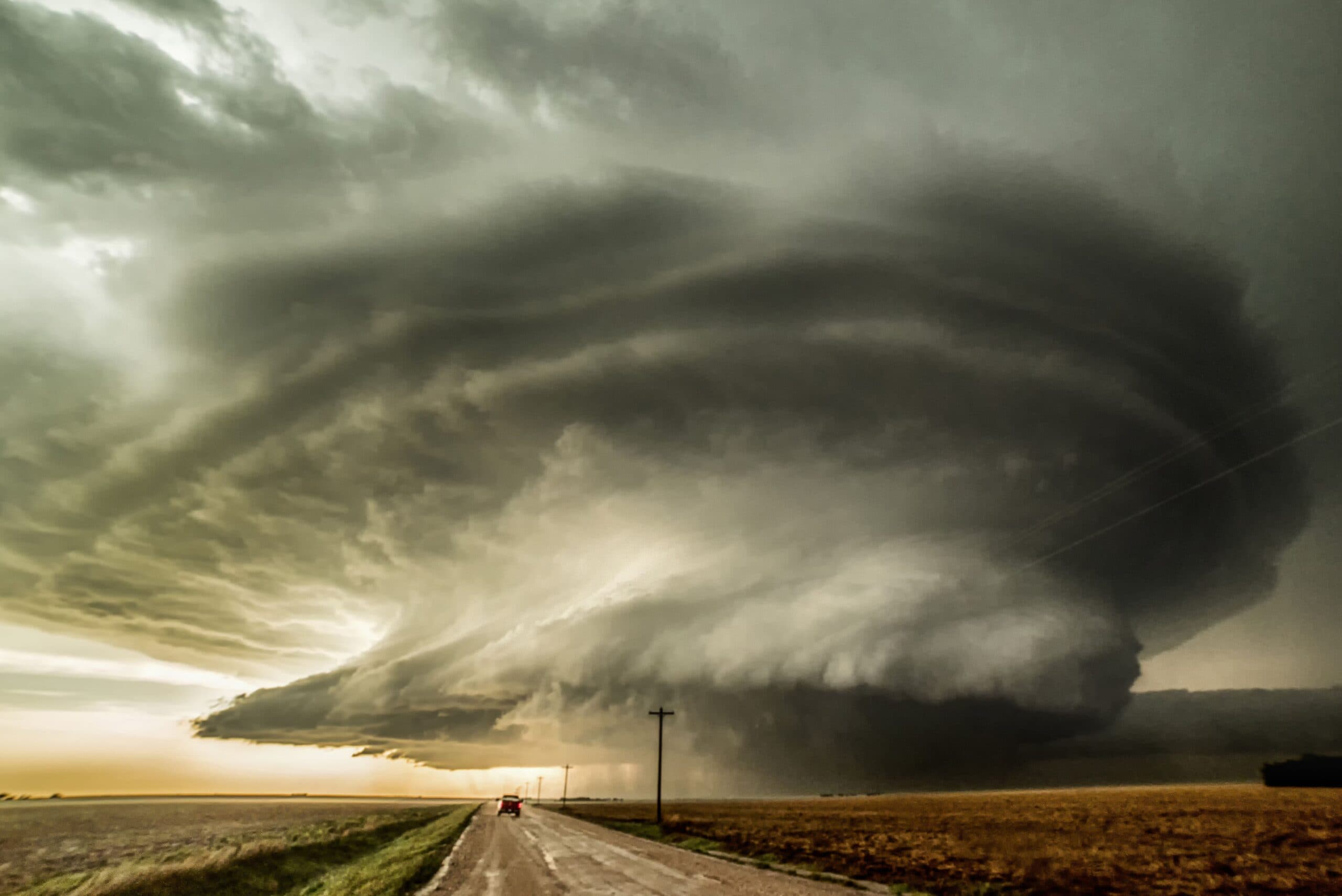
A tornado is associated with a rotating thunderstorm and circulation extending through the atmosphere. A river does not create an invisible barrier capable of stopping that circulation.
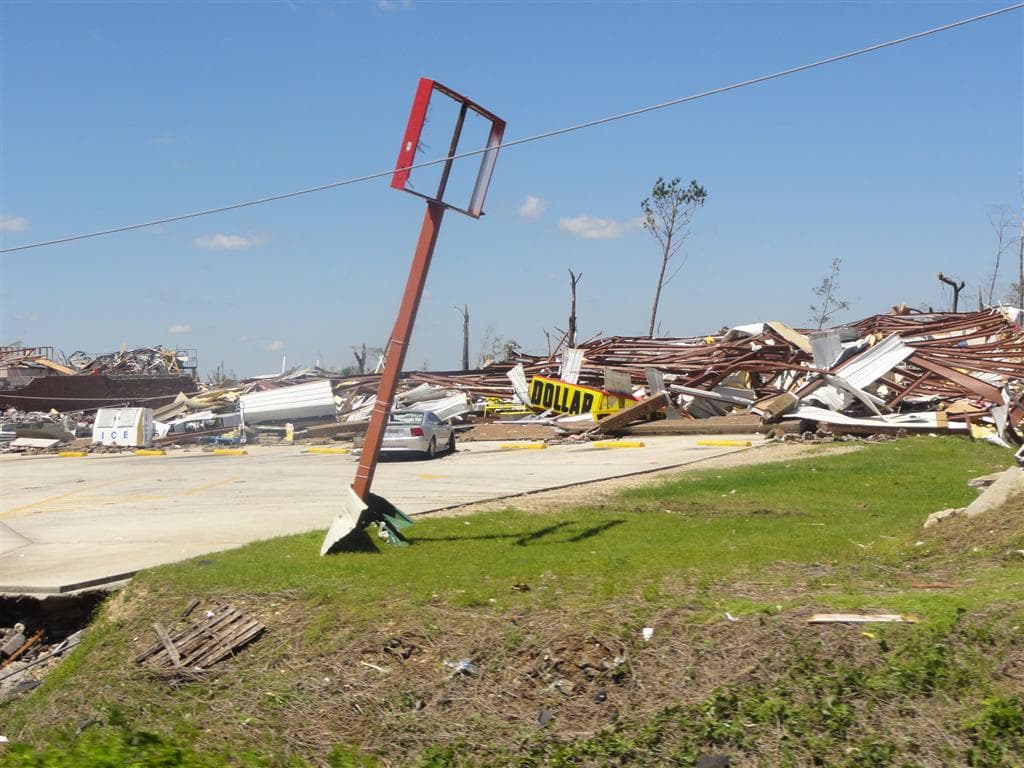
The National Weather Service notes that rivers have no clear protective effect against tornadoes. One of the most dramatic historical examples is the Tri-State Tornado of March 18, 1925, which crossed both the Mississippi and Wabash Rivers during its destructive path.
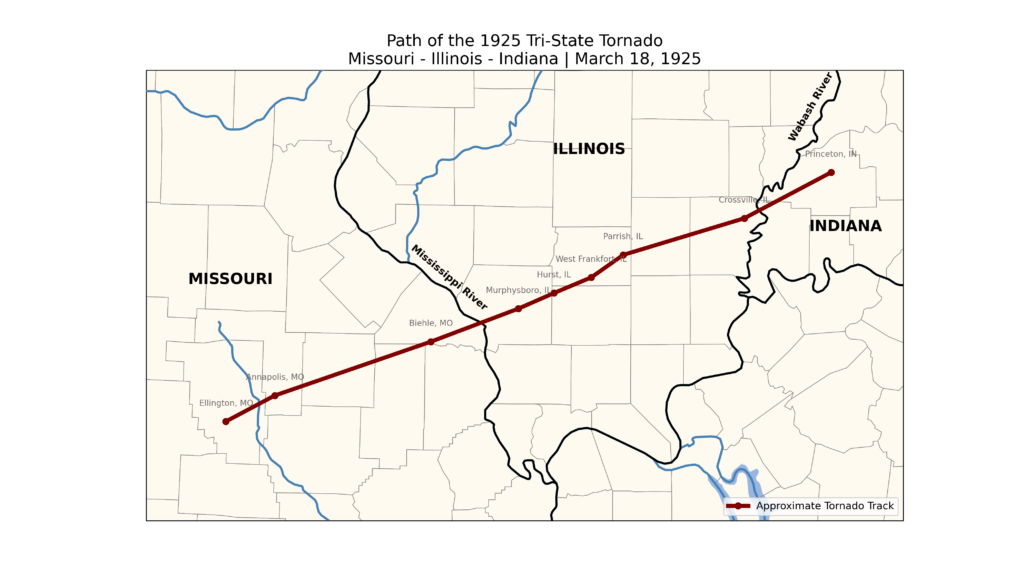
NOAA’s National Severe Storms Laboratory goes even further: significant tornadoes have crossed every major river east of the Rocky Mountains.
The bottom line: Living beside a river should never be considered protection from a tornado. If your community is included in a tornado warning, take shelter regardless of what rivers, lakes or other geographic features lie between you and the storm.
2. The Rubber Tires on Your Car Protect You From Lightning
A hard-topped vehicle can provide protection from lightning, but it is not because of the rubber tires.
The protection primarily comes from the vehicle’s metal exterior.
When lightning strikes a hard-topped metal vehicle, the electrical current can travel around the exterior of the vehicle before continuing toward the ground. Occupants should remain inside with the windows closed and avoid touching conductive components connected to the exterior.
That distinction is important because not every vehicle offers the same protection. Convertibles, motorcycles, bicycles and open vehicles should not be considered safe lightning shelters.
3. The Southwest Corner of Your House Is the Safest Place During a Tornado
For generations, some people have been told that if a tornado approaches, they should take shelter in the southwest corner of their home or basement.
There is no particular corner of a house that is universally safest during a tornado.
The “southwest corner” myth developed partly from the idea that tornadoes generally approach from the southwest. From that assumption came the belief that debris would be carried toward the opposite side of a structure, leaving someone in the southwest corner better protected.
There are several problems with that reasoning.
Tornado Winds Don’t Blow in One Direction
A tornado is a violently rotating column of air. Even if the tornado itself is moving from southwest to northeast, the winds surrounding its circulation are not simply blowing from southwest to northeast.
Depending on where you are relative to the circulation, the wind can strike a structure from different directions. Tornadoes can also travel in directions other than the commonly observed southwest-to-northeast motion.
That means choosing a shelter location based solely on which direction you believe the tornado is approaching from can give you a false sense of security.
Corners Aren’t Safe
When selecting a tornado shelter inside a home, the direction of the room matters far less than how well that location separates you from the storm and its debris.
The best option is moving to a basement, storm shelter, or safe room.
If your home does not have one, go to a small, windowless interior room on the lowest floor, such as an interior bathroom, closet or hallway.
The goal is to put as many walls as possible between you and the outside.
Stay away from windows and exterior walls, get as low as possible, and protect your head and neck from flying or falling debris. Blankets, pillows, mattresses and helmets can provide additional protection.
4. “Heat Lightning”
You’ve probably seen distant flashes on a hot summer night, but never hear thunder.
It’s commonly called “heat lightning.”
But there is no special type of lightning created by summer heat.
What you’re seeing is ordinary lightning produced by a thunderstorm far enough away that its thunder cannot be heard from your location. Light can travel enormous distances through the atmosphere, while the sound produced by thunder becomes too weak to hear at much shorter distances.
More importantly, don’t assume that a storm has to be directly overhead before lightning becomes dangerous.
The National Weather Service reports that lightning can strike miles away from the main thunderstorm and precipitation area. So if you can hear thunder, you are already close enough to the storm for lightning to pose a threat.
5. An Overpass is a Sufficient Shelter from a Tornado
Images of people sheltering underneath highway overpasses have helped keep this myth alive.
An overpass is not a tornado shelter.
An overpass can actually make the wind worse. As powerful winds are forced through the narrow opening beneath the structure, they can accelerate, creating a wind-tunnel effect. Combined with flying debris being driven through the same confined space, this can make sheltering beneath an overpass especially dangerous.
If a tornado threatens while you are driving, your best option is to reach a sturdy building or designated tornado shelter if one is safely accessible.
Do not intentionally drive toward an overpass to seek shelter.
Preparation Over Beliefs
Severe weather will always contain uncertainty. Meteorologists cannot predict the exact path of every tornado days in advance or tell you precisely where lightning will strike.
But uncertainty is not the same as ignorance.
We know a great deal about how thunderstorms, tornadoes, lightning and flash floods behave, and decades of meteorological research have helped improve the safety guidance used today.
The best severe weather plan is built around that science.
Know where you will shelter before storms develop. Have multiple reliable ways to receive warnings. Understand the difference between a watch and a warning. And when a warning is issued for your location, don’t wait for visual confirmation before taking action.
Most importantly, don’t allow a weather myth to make that decision for you.
Comments
Join the Conversation