
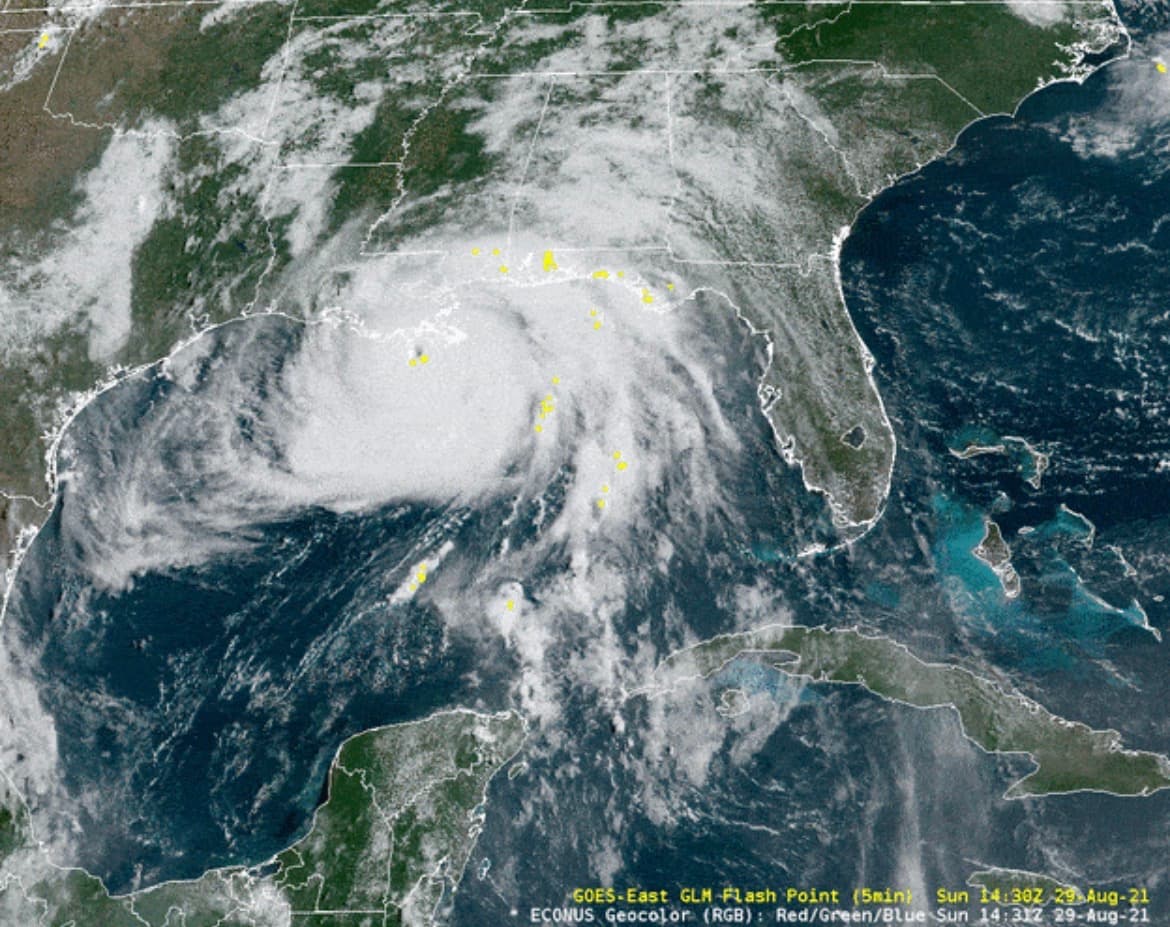

WillBrattonWX – On September 12, the Atlantic entered record territory for the latest a hurricane season has gone without producing its first hurricane. However, the final record has not been set just yet.
The peak of hurricane season is September 10th; usually by this time, the Atlantic has seen about 3 hurricanes, 1 having major status.
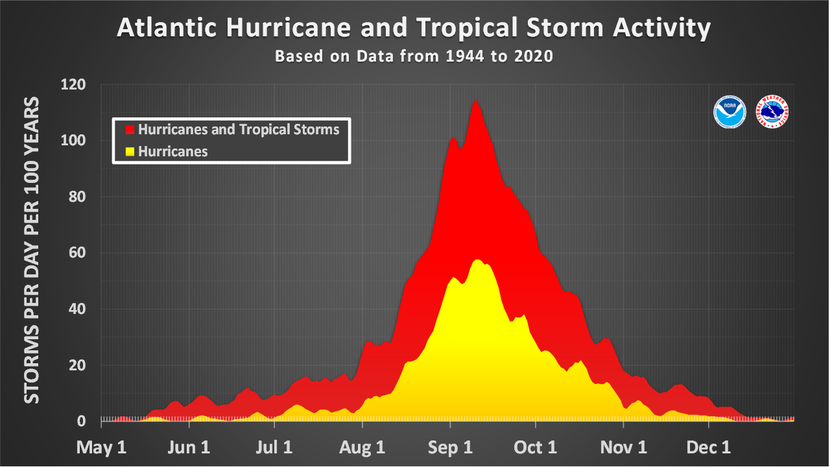
So far in the 2026 Atlantic hurricane season, the US has seen five named storms: Arthur, Bertha, Cristobal, Dolly, and Edouard, none of which have strengthened past tropical storm status.
A Record 60 Years in the Making:
Satellite monitoring began in the 1960s, giving meteorologists the ability to watch the tropics in real time.
Since the satellite era began, the latest first hurricane of the season occured on September 11th, both in 2002 with Hurricane Gustav, and in 2013 with Hurricane Humberto.
When Sept. 11 passed without a hurricane in 2026, the Atlantic moved into record territory.
But there is an important distinction: the final record has not been established just yet.
The hurricane-free streak in still ongoing. Every additional day without the season’s first hurricane pushes the record farther into the calendar. The final record date won’t be known until the Atlantic eventually produces its first hurricane.
In other words, September 12 marked the day the previous record was broken, not necessarily the new record’s final date.
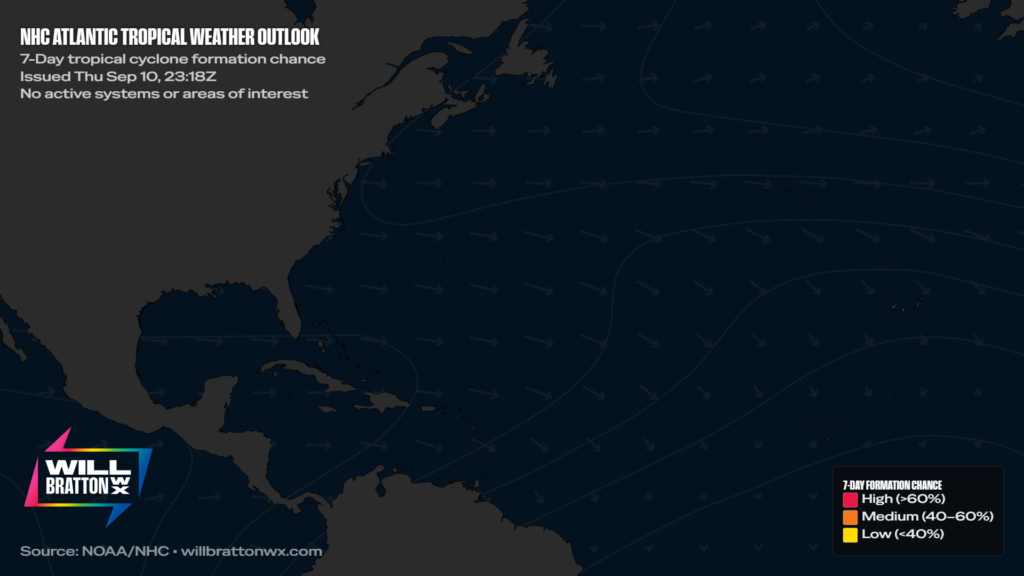
The NHC is also forecasting no tropical activity over the next 7 days, allowing the 2026 Atlantic season to smash the previous record well past Sept. 11th. (As of Sept. 12th. This is now outdated.)
But why is the Atlantic so quiet?
One major factor behind the lack of hurricanes is the Super El Nino occurring in the Pacific Ocean.
Yes, the weather in the Pacific Ocean can affect the weather in the Atlantic.
El Niño is characterized by unusually warm waters across portions of the equatorial Pacific Ocean, but its effects can influence weather patterns thousands of miles away.
In the Atlantic, El Niño often increases vertical wind shear. Wind shear refers to changes in wind speed or direction with height in the atmosphere.
Tropical cyclones generally need relatively low wind shear to organize. Strong shear can tilt or disrupt a developing storm’s circulation, separating thunderstorms from its center and making it much more difficult for the system to strengthen.
Those hostile atmospheric conditions have helped prevent this year’s tropical storms from reaching hurricane intensity.
But Hurricane Season isn’t over yet…
Despite the historic lack of hurricanes, a quiet start does not guarantee a quiet finish.
The Atlantic hurricane season officially runs through November 30, leaving plenty of time for additional tropical systems to develop.
September and October can both produce powerful hurricanes, and warm ocean temperatures capable of supporting tropical cyclones remain across portions of the basin.
The 2026 season may be entering the record books for how long it has taken to produce its first hurricane, but that doesn’t mean coastal residents should let their guard down.
For now, though, the Atlantic remains remarkably quiet—and beginning September 12, that quiet stretch became one for the record books.
Comments
Join the Conversation